
 0
0

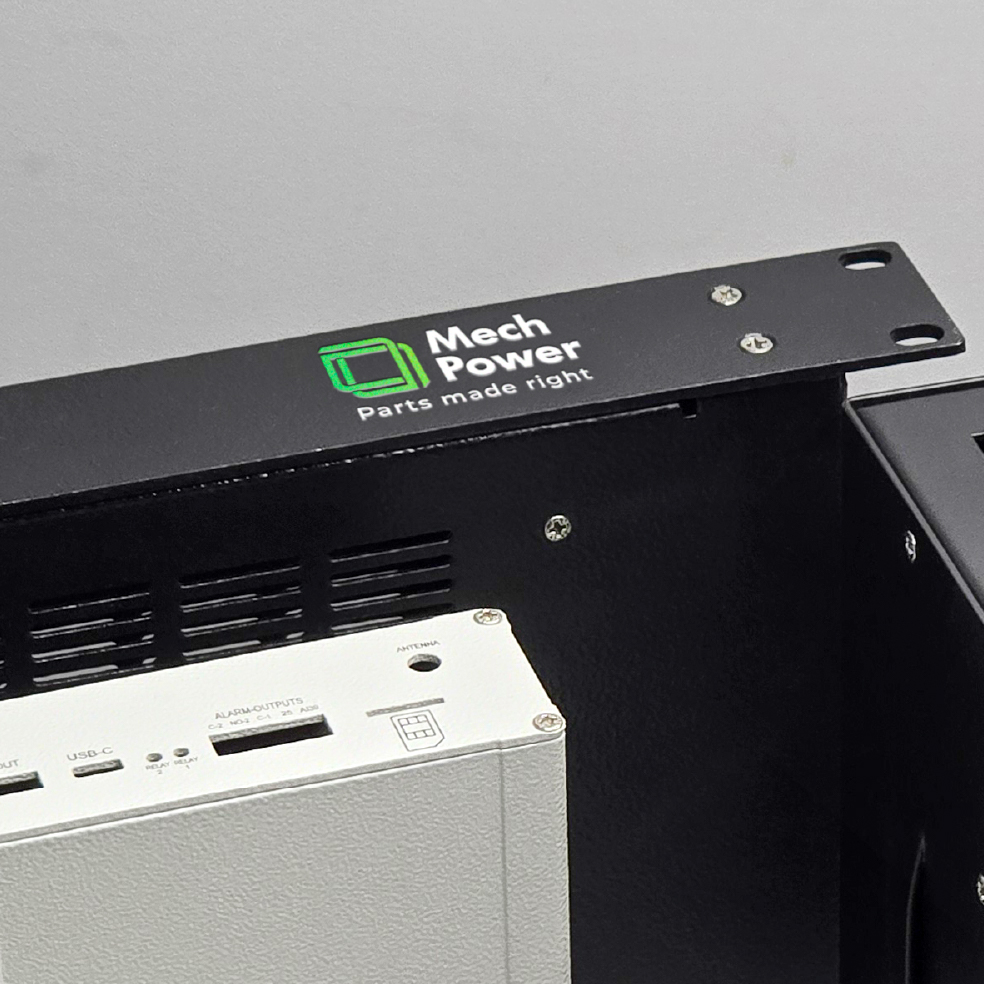
If you have ever seen a plastic enclosure where the logo starts peeling after a few weeks or the text fades near snap-fit areas, the issue is rarely the printer. In most cases it comes down to how UV printing was planned for the plastic material and part design.
In modern manufacturing, a part is rarely "done" just because it’s out of the mold or off the print bed. Whether it’s a medical device requiring serial numbers or an electronic enclosure needing a high-contrast logo, UV Printing is the bridge between a raw part and a finished product.
At Mech Power, we see the entire lifecycle. Because we know that the "secret sauce" of a perfect UV print isn't just the ink, it’s how that ink shakes hands with the specific polymer underneath.
What Is UV Printing on Plastic and How It Works
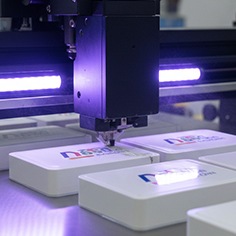
UV printing on plastic is a digital process where ink is printed directly onto the surface of a plastic part and cured instantly using ultraviolet light. Instead of waiting for the ink to dry, the UV light hardens it on contact, forming a solid layer that bonds to the surface as it’s printed.
The process starts with surface prep. Any oils, dust, or leftover residue on the plastic can interfere with adhesion, so the material is cleaned first. Then, UV ink is applied in a precise, controlled layer and cured immediately by built-in UV lamps.
This is why UV printing works best when material selection, surface preparation and part design are considered together rather than treated as a final cosmetic step.
Plastic Materials Commonly Used for UV Printing
UV printing results vary based on plastic type surface behavior and how the part is manufactured. Understanding these differences helps ensure reliable adhesion and durability.
🔹 Rigid thermoplastics
ABS and polycarbonate are commonly used for UV printed enclosures and housings. Their stable surfaces support good ink adhesion and consistent print quality.
🔹 Additively manufactured plastics
Layer-based plastics used in 3D printing introduce surface texture and orientation effects. With controlled printing and post-processing UV printing is often used during prototyping and early design validation.
🔹 High-detail resin plastics
Resin-based parts offer smoother surfaces and sharper detail. This makes them suitable for UV printing fine text symbols and visual markings.
🔹 Injection molded plastics
Molded plastics provide the most consistent surfaces for UV printing. They are preferred when prints need to scale reliably across production batches.
At Mech Power UV printing is aligned with plastic manufacturing methods including 3D printing services and injection molding to ensure print performance matches the part’s production stage.
Dos and Don'ts of UV Printing on Plastic
UV printing on plastic delivers reliable results when material behavior, surface preparation and design intent are aligned from the start. Most issues don’t come from the printer itself but because basic planning steps are skipped. The following dos and don'ts highlight what consistently works in real production environments.
Dos of UV Printing on Plastic
🔹 Do identify the plastic material early: Different plastics react differently to UV ink. ABS polycarbonate resin and molded plastics all have distinct surface characteristics. Knowing the material early allows the printing process to be adjusted for adhesion curing and durability.
🔹 Do prepare the surface before printing: Plastic parts often carry dust oils, static or mold release agents from manufacturing. If they’re not cleaned properly, ink won’t stick well and prints may peel or flake over time.
🔹 Do choose rigid and stable print zones: UV printing performs best on areas that do not flex during assembly or use. Flat wall ribs and reinforced sections provide better long-term adhesion compared to snap fits clips or thin walls.
🔹 Do align UV printing with part design: Print locations should be planned during the design phase. Clearances from edges, holes, fasteners and bends help prevent cracking or wear caused by handling and assembly stresses.
🔹 Do use vector-based artwork: Vector files maintain sharp edges and consistent proportions across different part sizes. This is especially important for logos text and compliance markings.
🔹 Do validate prints through testing: Test prints help verify adhesion clarity and curing before moving to full production. This step is critical when introducing a new plastic material or surface finish.
Don'ts of UV Printing on Plastic
🔹 Do not assume all plastics behave the same: Plastics differ widely in surface energy and flexibility. A print that works well on one material may fail on another even if they look similar.
🔹 Do not print on flexible or stressed features: Snap fits thin walls and living hinges flex during use. UV printed ink layers cannot accommodate repeated flexing and may crack or peel.
🔹 Do not skip surface cleaning or preparation: Even small amounts of oil or residue can cause adhesion failure. Printing directly on unprepared surfaces is one of the most common causes of rework.
🔹 Do not place prints too close to edges or cutouts: Edges and holes experience higher stress during handling and assembly. Prints placed too close may chip or wear prematurely.
🔹 Do not overload small areas with fine details: Very small text or dense graphics can lose clarity depending on surface texture and curvature. Artwork should be designed with the surface condition in mind.
🔹 Do not expect metal-level abrasion resistance: UV prints on plastic are durable but plastics are inherently softer than metal. For heavy-use or outdoor applications additional protection may be required.
Practical Takeaway
Successful UV printing on plastic is not about pushing ink onto a surface. It is about understanding how the plastic is made, how it behaves in use and where printing fits within the part design. Following these dos and don'ts helps ensure prints remain clean, legible and durable throughout the product lifecycle.
When UV Printing Is Not the Right Choice for Plastic Parts
UV printing is a reliable finishing process for many plastic components, but it is not a universal solution. Understanding its limitations is just as important as knowing its strengths. In certain applications, alternative marking or finishing methods may be more appropriate.
The following scenarios highlight when UV printing on plastic should be reconsidered or planned with additional precautions.
🔹 Parts designed to flex repeatedly such as snap fits clips or living hinges
🔹 High-contact or abrasion-prone areas like grips sliders or frequently handled surfaces
🔹 Outdoor applications with prolonged sunlight exposure and temperature cycling
🔹 Environments involving oils solvents or aggressive cleaning chemicals
🔹 Highly textured uneven or stepped surfaces that reduce print clarity
🔹 Very small parts with limited space for readable graphics
🔹 Late-stage design changes where print zones conflict with part geometry
Practical Note
When any of the above conditions apply UV printing may still be possible but requires additional design adjustments surface treatment or alternative marking strategies.
UV printing on plastic works best when it is designed into the part, not added after manufacturing. Material choice, surface condition, and feature placement directly affect print durability.
At Mech Power, UV printing is integrated with plastic part customization across 3D printing and injection molding. This allows print locations, finishes, and part geometry to be aligned early, resulting in consistent and production-ready markings.
Planning UV printing on a custom plastic part?
Review your enclosure or part design with Mech Power to validate cutouts, surface finish, and UV printing together.
FAQS
Frequently Asked Questions
UV printing works best on rigid plastics with stable surfaces such as ABS polycarbonate resin-based plastics and injection molded materials. Surface condition and rigidity are more important than appearance alone.
Yes. UV printing is commonly used on FDM and resin 3D printed parts. Surface quality and post-processing play a key role in print clarity and adhesion especially on FDM parts.
Peeling or cracking usually occurs due to poor surface preparation, low surface energy plastics or printing on flexible features such as snap fits or thin walls.
Vector-based artwork is recommended to maintain sharp edges, consistent scaling and clear text across different part sizes.
UV printing should be considered during material selection and part design. Early planning reduces rework and ensures that printed markings remain durable in real-world use.