
 0
0

In metal manufacturing, UV printing is rarely the first operation and almost never the last thing that should be decided casually. Whether it’s a sheet-metal enclosure, a CNC-machined panel, or an industrial metal part, UV printing sits at the intersection of fabrication, finishing, and final assembly.
Most UV printing failures on metal are not ink-related. They occur when printing is introduced without considering forming operations, surface finishes, handling stages, or how the part will be installed and used. This guide looks at UV printing on metal from a fabrication and enclosure-design perspective rather than a purely printing viewpoint.
How UV Printing Works on Metal Parts and Enclosures
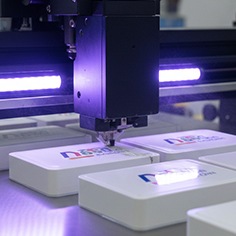
UV printing on metal involves applying ink directly onto a finished metal surface, then curing it instantly with ultraviolet light. Instead of soaking in, the ink hardens into a solid layer that bonds to the top of the material.
For metal, the critical factor is surface readiness. UV printing typically happens after fabrication steps such as cutting, bending, machining, and surface finishing. Any leftover machining oil, uneven paint, powder coating texture, or even fingerprints can affect how well the ink sticks.
Metal parts are rigid, which makes them ideal for UV printing. Bends, corners, fastener holes, and contact edges often flex or get handled more, which can cause printed designs in those areas to crack or wear off over time. Keeping print placements away from these zones helps maintain durability and appearance.
Metal Materials Commonly Used for UV Printing
UV printing performance on metal depends primarily on the surface finish and treatment rather than the base metal alone. Different metals respond differently to UV ink based on how they are coated, finished, or prepared after fabrication.
🔹 Mild steel and cold-rolled steel
These materials are widely used for industrial parts and enclosures. UV printing is typically applied after powder coating or painting, as raw steel surfaces do not provide consistent ink adhesion.
🔹 Aluminium
Aluminium is commonly used for lightweight parts, panels, and enclosures. UV printing performs well on painted, powder-coated, or anodized aluminium surfaces with controlled surface finish.
🔹 Stainless steel
Stainless steel offers high mechanical strength and corrosion resistance. UV printing is generally applied on coated or treated stainless steel rather than bare metal due to its low surface energy.
🔹 Coated and finished metal surfaces
Powder-coated, painted, and anodized surfaces provide the most reliable base for UV printing. In many cases, the coating type and texture influence print quality more than the underlying metal itself.
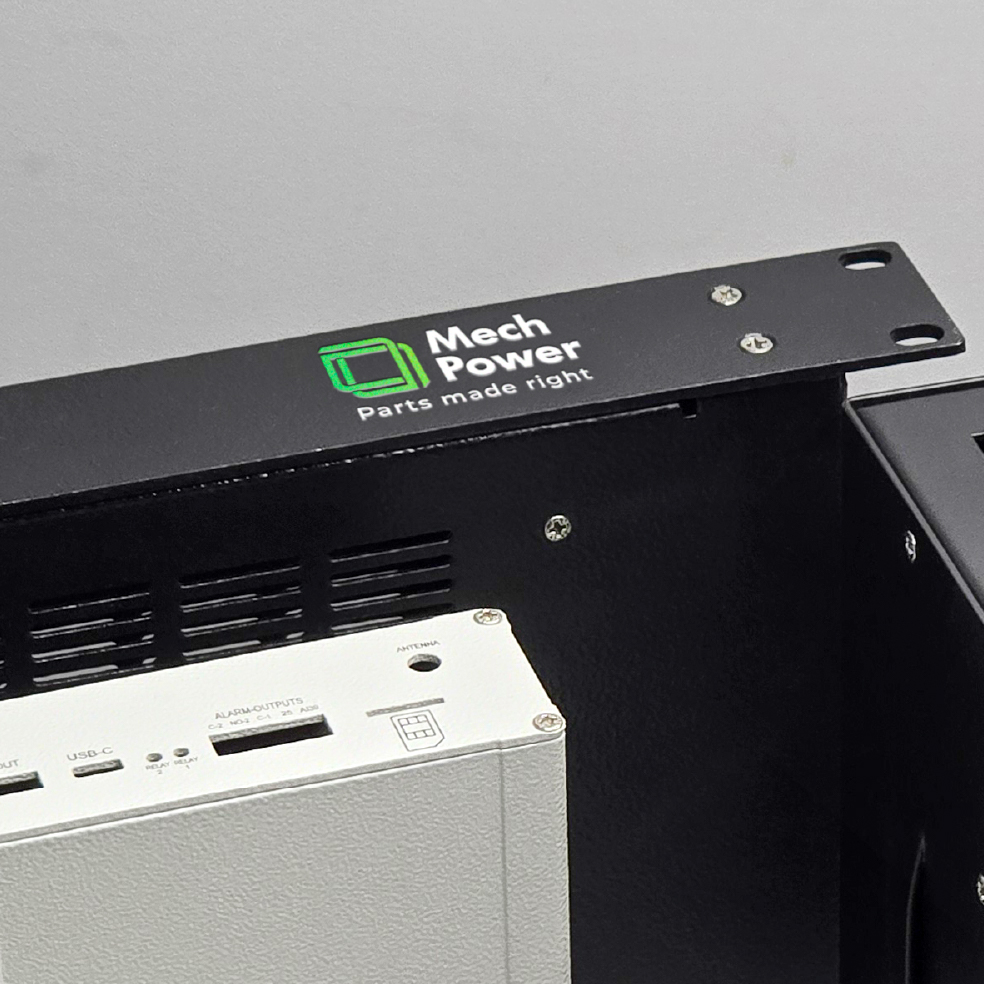
At Mech Power, UV printing on metal is aligned with part manufacturing and finishing processes, ensuring that printing is performed on production-ready surfaces rather than raw fabricated parts.
Dos of UV Printing on Metal
🔹 Do finalize all fabrication steps before UV printing: UV printing should only be applied after cutting, bending, welding, and machining are complete. Printing before fabrication introduces mechanical stress that can crack or delaminate the ink layer.
🔹 Do apply UV printing after surface finishing: Powder coating, painting, or anodizing must be completed before printing. The final finish directly affects how well the ink adheres and how long it lasts.
🔹 Do select flat and low-stress print zones: Flat panels away from bends, seams, and mounting points provide stable surfaces for UV ink. These areas experience less mechanical stress during installation and use.
🔹 Do clean metal surfaces before printing: Metal parts often retain oils from fabrication and handling. Proper cleaning ensures uniform ink bonding and prevents early chipping or peeling.
🔹 Do align print placement with enclosure layout: Logos, labels, and markings should account for cutouts, vents, fasteners, and interfaces. This prevents visual conflicts and wear caused by assembly actions.
🔹 Do validate prints on actual coated samples: Different coatings and textures affect ink behavior. Testing on production-intent samples avoids inconsistencies during scale-up.
Don’ts of UV Printing on Metal
🔹 Do not print before bending or forming operations: UV ink layers cannot accommodate forming stress. Printing before bends almost always results in cracking or loss of adhesion.
🔹 Do not print on raw or untreated metal surfaces: Bare metal provides inconsistent adhesion and is prone to oxidation. UV printing performs best on coated or treated surfaces.
🔹 Do not place prints across bends or welded seams: These areas experience localized stress during use and installation. Ink applied here is more likely to chip or fracture over time.
🔹 Do not assume all surface finishes behave the same: Powder coat texture, paint thickness, and anodized finishes all influence ink bonding. Assuming uniform behavior leads to unpredictable results.
🔹 Do not print too close to edges or fasteners: Edges and fasteners are high-contact zones. Printing in these areas increases the risk of abrasion and damage during handling.
🔹 Do not add UV printing as a late-stage change: Late additions often conflict with fabrication and finishing constraints. Early planning ensures proper placement and durability.
When UV Printing Is Not the Right Choice for Metal Parts and Enclosures
UV printing is a reliable finishing process for many metal parts and enclosures, but it is not suitable for every fabrication scenario. On metal, the success of UV printing depends heavily on fabrication sequence, surface finish, and mechanical stress during use. When these factors are not considered, alternative marking methods may provide better long-term performance.
The following scenarios highlight when UV printing on metal should be avoided or planned with additional precautions:
Parts that require bending, forming, or welding after marking, as post-print deformation can crack or delaminate the ink layer
● Raw or untreated metal surfaces where adhesion is inconsistent without proper coating or surface treatment
● Heavily textured powder-coated finishes that reduce legibility and uniform ink bonding
● High-contact or abrasion-prone areas such as mounting edges, sliding interfaces, or frequently handled panels
●Outdoor applications with prolonged exposure to sunlight, moisture, and temperature cycling without protective coatings
● Environments involving oils, solvents, or aggressive cleaning chemicals that can degrade printed markings
● Late-stage print additions that conflict with cutouts, fasteners, or assembly clearances
When any of the above conditions apply, UV printing may still be possible but often requires changes in fabrication order, surface finishing strategy, print placement, or additional protective measures. Evaluating these factors early helps determine whether UV printing or an alternative marking method is the right choice for the application.
Integrating UV Printing into Metal Part and Enclosure Customization
For metal parts and enclosures, UV printing works best when coordinated with cutouts, bends, surface finishes, and assembly features.
At Mech Power, UV printing is integrated with metal enclosure and part customization, including sheet metal fabrication, CNC machining, surface finishing, and final assembly. This ensures printed markings remain aligned with how the part is manufactured and used in real applications.
Designing a custom metal enclosure or part with UV printing?
Review your fabrication sequence, surface finish, and print zones together with Mech Power before finalizing production. Contact Us!
FAQS
Frequently Asked Questions
UV printing works best on coated metals such as powder-coated steel, painted aluminium, and anodized aluminium.
UV printing is not recommended on raw or untreated metal due to poor and inconsistent ink adhesion.
UV printing should be done only after all cutting, bending, welding, and surface finishing processes are complete.
Cracking occurs when prints are placed too close to bends or when printing is done before forming operations.
UV printing should be considered during enclosure or part design to align print zones with fabrication and finishing stages.