
 0
0

Yellow passivation is a common surface finish for mild steel parts where corrosion resistance matters but tight tolerances must be maintained. You’ll often find it on brackets, enclosures, fasteners, and internal hardware in controlled industrial environments.
This guide breaks down what yellow passivation is, how it works, when it makes sense, and how it compares with other finishing methods like chromatizing.
What Is Yellow Passivation?
Yellow passivation is a chemical treatment applied to zinc-plated mild steel to boost corrosion resistance.
Once the steel is electroplated with zinc, it’s dipped in a chromate solution. This creates a thin yellow-gold layer on top of the zinc. That layer slows down oxidation and extends the life of the zinc coating.
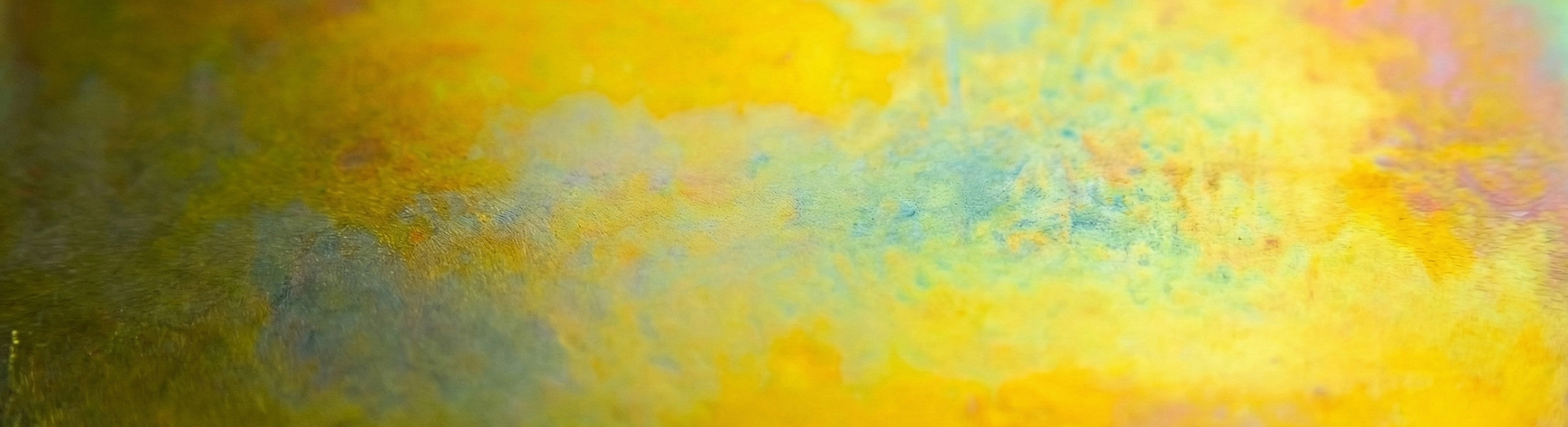
Its iridescent yellow appearance is a telltale sign of proper passivation.
Why Use Yellow Passivation on Mild Steel Parts?
Yellow passivation offers several advantages:
- Better corrosion protection than bare or just zinc-plated steel
- Uniform finish without adding measurable thickness
- Keeps tight tolerances intact, ideal for threaded or machined parts
- More affordable than thicker coating systems
- Easy to inspect visually
For hardware inside enclosures or internal mechanical parts, it strikes a good balance between durability, cost, and ease of manufacturing.
Where It's Typically Used
You’ll often see yellow passivation used on:
- Brackets, mounting plates, and sheet metal parts
- Internal chassis structures
- Screws, washers, and spacers
- Electrical panel hardware
- Mechanical assemblies needing dimensional accuracy
It’s best suited for indoor or low-exposure environments where moisture and harsh chemicals aren’t a major concern.
The Yellow Passivation Process
This finish is always applied after zinc electroplating. Here’s the basic process:
- Clean and degrease the part
- Zinc plate it
- Rinse off plating residues
- Dip in a yellow chromate bath
- Let the conversion layer form
- Rinse and dry the part
The result is a stable, corrosion-resistant surface with a yellow-golden sheen.
Design and Performance Considerations
Before specifying yellow passivation, keep these points in mind:
- The passivation layer is extremely thin tolerances won’t be affected
- Surface texture and machining marks will still show
- It’s a functional finish, not meant for aesthetics
- Corrosion resistance is moderate, not suitable for harsh environments
- The zinc plating quality matters a lot
- Color may vary slightly between parts, which is normal
In short, it protects, but it’s not decorative.
When Yellow Passivation Should Be Chosen
It’s a solid choice when:
- You're working with mild steel
- The part needs to stay dimensionally accurate
- It's going inside an enclosure or another protected space
- You want cost-effective corrosion resistance
- A thicker finish would interfere with fit or function
It’s commonly used for mounting hardware, internal fasteners, and precision mechanical parts.
When It’s Not the Right Fit
Skip yellow passivation if:
- The part will be exposed to outdoor or marine conditions
- High humidity or harsh chemicals are involved
- You need a decorative or uniform cosmetic finish
- The part is made from aluminum or stainless steel
- Long-term corrosion resistance is a top priority
In those cases, look into powder coating, anodizing, or more robust protection systems.
Yellow Passivation vs. Chromatizing
Feature | Yellow Passivation | Chromatizing |
Base Material | Zinc-plated mild steel | Bare aluminum |
Applied On | Zinc layer | Aluminum surface |
Main Purpose | Protect zinc-coated steel | Protect aluminum |
Thickness | Negligible | Negligible |
Affects Tolerances? | No | No |
Electrical Conductivity | Limited | Preserved |
Appearance | Yellow to golden, iridescent | Yellow-iridescent |
While the finishes might look similar, they’re used on different base materials and aren’t interchangeable.
Conclusion
Yellow passivation is a reliable, low-profile finish for mild steel parts in low-exposure settings. It works well for internal parts where corrosion protection is needed, but tight fits and low cost are priorities.
When used correctly, it helps manufacturers strike the right balance between protection, performance, and precision.
FAQS
Frequently Asked Questions
To improve corrosion resistance on zinc-plated mild steel.
No. It’s a chemical conversion layer, not paint or powder.
No. The layer is thin enough to avoid any measurable change.
No. This process is only for zinc-plated mild steel.
Slight color variation is normal and doesn’t affect performance.