

 0
0

As products evolve, the expectations from finishing and detailing also increase. Today, the overall look and feel of a product has become just as important as its functionality, making surface printing and aesthetics a key focus in modern product design.
Choosing the right printing method helps achieve better clarity, durability, and consistency across parts and enclosures. For example, in industrial panels and electronic enclosures, clear and long-lasting markings are essential for usability and maintenance over time.
In this blog, we will guide you through the differences between pad printing, screen printing, and UV printing, and help you make informed decisions for your designs.
The Role of Printing in Product Performance and Usability
The printing method you choose directly affects how your product performs in real use. It influences how clearly labels are read, how long markings last, and how well the product maintains its appearance over time.
Different applications demand different outcomes. For example, control panels require clear and consistent labeling, while enclosures often need detailed branding and interface markings that remain visible even after repeated use.
Selecting the right method helps ensure better readability, durability, and overall product experience. When aligned early with design and manufacturing, it leads to more consistent and reliable results across parts and enclosures.
Overview of Common Printing Methods Used in Manufacturing
There are multiple printing methods used for marking, labeling, and branding on parts and enclosures. Among them, pad printing, screen printing, and UV printing are the most commonly used in manufacturing.
Each method works differently based on surface type, design complexity, and application requirements. Some are better suited for curved surfaces, while others are ideal for flat panels or high-detail graphics.
Understanding how these methods differ helps in selecting the right approach for your product. In the following sections, we will look at each method in detail and where it fits best.

Pad Printing for Curved and Irregular Surfaces
Pad printing is widely used for transferring ink onto surfaces that are not flat. It uses a soft silicone pad to pick up ink from an etched plate and transfer it onto the part.
This method works well for curved, uneven, or small surfaces where other printing techniques may not be effective. It is commonly used for simple markings, symbols, or labels on compact components.
Pad printing is suitable for applications such as:
Small plastic or metal parts
Curved enclosures
Basic identification markings
While it offers flexibility in handling different shapes, it has some limitations. The level of detail is limited, and it may not be ideal for complex graphics or high-resolution designs.
For products where simple marking on irregular surfaces is required, pad printing remains a practical and reliable option.
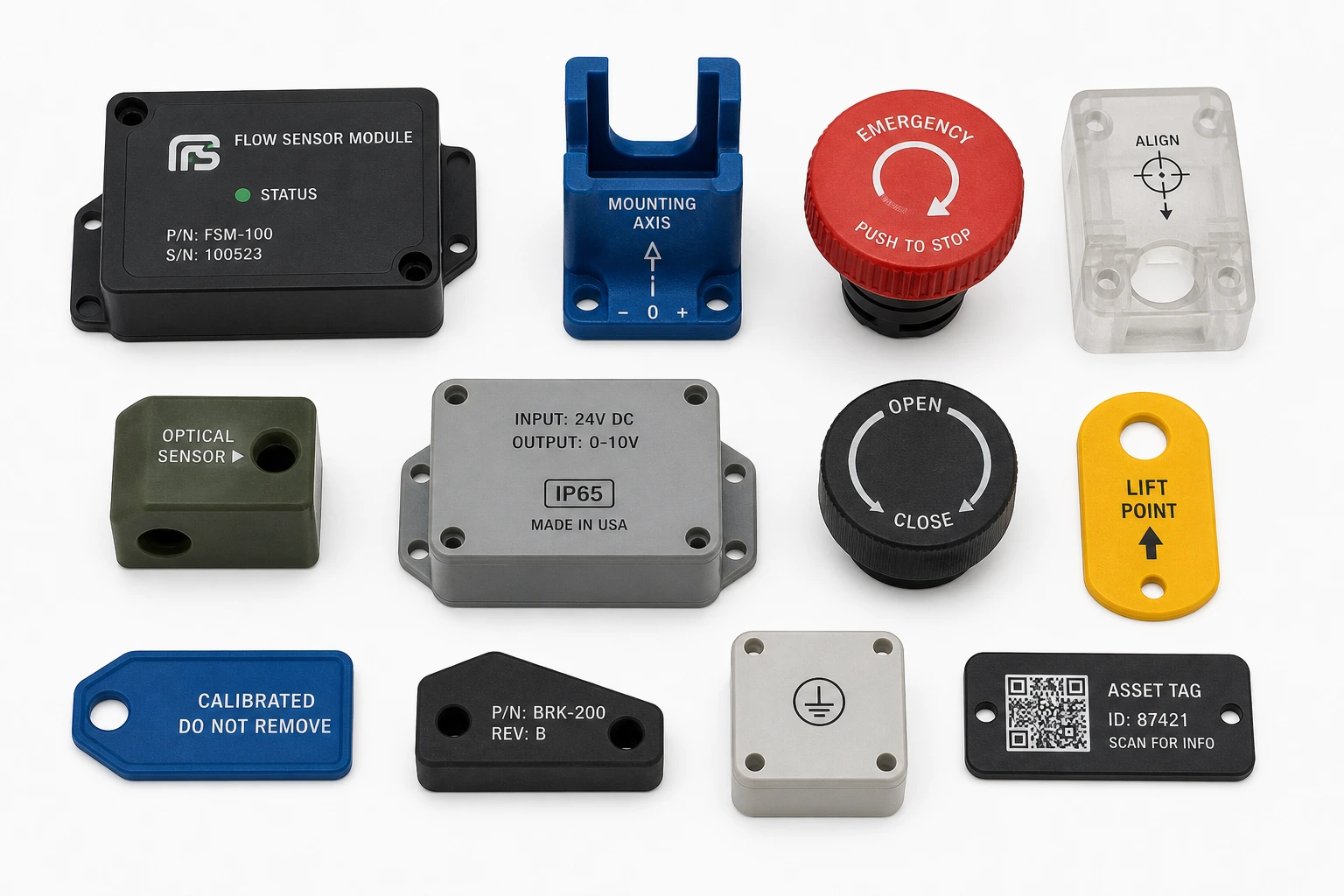
Screen Printing for Flat Panels and Surfaces
Screen printing is a widely used method for transferring ink onto flat surfaces. It uses a mesh screen to apply ink through a stencil onto the part, creating clear and uniform markings.
This method works best for flat panels and surfaces, especially where bold text, symbols, or simple graphics are required. It is commonly used in applications where consistency across multiple units is important.
Screen printing is suitable for:
Flat metal or plastic panels
Enclosure front panels and control interfaces
Products requiring bulk production with consistent labeling
It offers better coverage and visibility compared to pad printing, especially for larger areas. However, it may not be ideal for highly detailed or multi-color graphics, and is less effective on curved or uneven surfaces.
For applications focused on clear, durable, and repeatable markings on flat surfaces, screen printing remains a reliable and efficient solution.
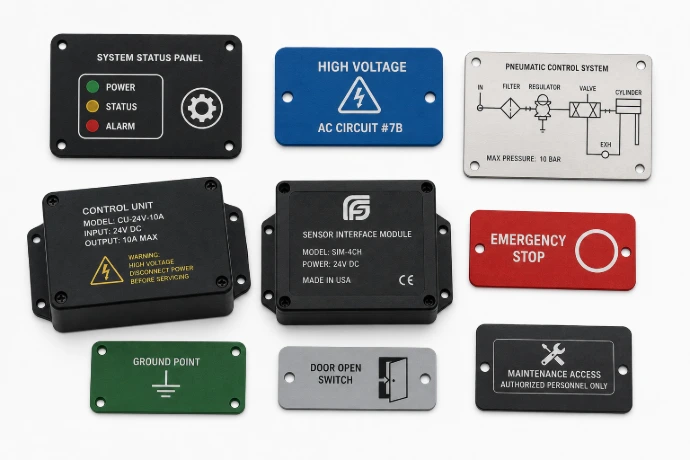
UV Printing for Detailed and Durable Markings
UV printing is a modern printing method used for creating high-detail, durable markings directly on parts and enclosures. It uses ultraviolet light to instantly cure the ink as it is printed, resulting in sharp and consistent output.
Unlike traditional methods, UV printing works well on both flat and slightly curved surfaces, making it suitable for a wide range of applications. It supports fine text, detailed graphics, and multi-color designs without compromising clarity.
UV printing is widely used for:
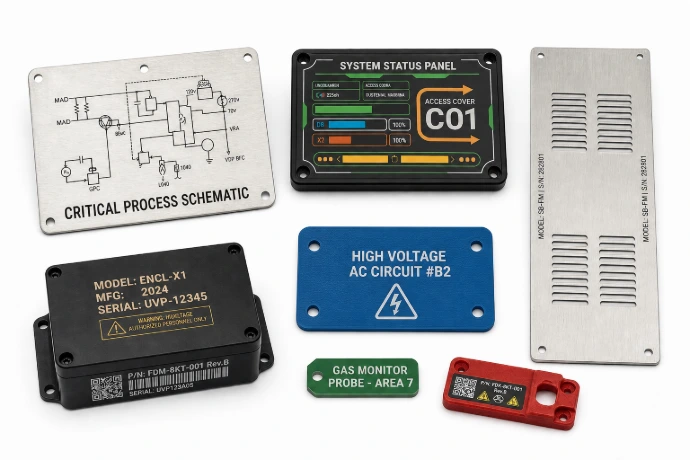
Enclosures with detailed interface markings
Front panels with labels, icons, and branding
CNC machined parts requiring high-resolution prints
One of the key advantages of UV printing is its ability to deliver consistent quality across batches, along with better resistance to wear under regular usage.
At Mech Power, UV printing is aligned with our enclosure design, sheet metal fabrication, and CNC machining capabilities. This ensures that parts and enclosures are prepared correctly for printing, resulting in better finish quality and long-term performance.
We also focus on practical aspects such as surface preparation, print placement, and design compatibility. These factors play an important role in achieving reliable results across different materials like plastic and metal.
To help teams make better decisions, we have also covered detailed guidelines in our blogs on UV printing Do’s and Don’ts for plastic and metal, highlighting what to consider during design and production.
For applications where clarity, detail, and consistency matter, UV printing provides a strong and reliable solution.
Pad Printing vs Screen Printing vs UV Printing
Understanding the differences between these methods helps in selecting the right approach based on surface type, design complexity, and application needs.
Feature | Pad Printing | Screen Printing | UV Printing |
Surface Type | Curved, uneven surfaces | Flat surfaces | Flat and slightly curved surfaces |
Detail Level | Low to moderate | Moderate | High |
Graphic Capability | Simple text and symbols | Bold graphics and labels | Fine text, detailed graphics, multi-color |
Durability | Moderate | Moderate | High |
Consistency Across Batches | Moderate | High | High |
Best Use Case | Small parts, curved enclosures | Flat panels, bulk production | Enclosures, panels, precision parts |
Material Compatibility | Plastic, metal | Plastic, metal | Plastic, metal, coated surfaces |
This comparison highlights a key takeaway.
Each method has its place, but the right choice depends on the application, surface, and level of detail required.
Key Factors to Consider Before Selecting a Printing Method
Surface Type: Curved and uneven surfaces require different methods compared to flat panels. Matching the printing process with geometry ensures better adhesion and clarity.
Level of Detail Required: Simple text and symbols can be achieved with traditional methods, while fine text, icons, and multi-color graphics need higher precision.
Durability Requirements: Parts exposed to handling or industrial environments need markings that remain clear and consistent over time.
Material Compatibility: Different materials such as plastic, metal, or coated surfaces respond differently to each printing method.
Application and Usage Conditions: The environment in which the product is used influences how well the print will perform over time.
Planning at Design Stage: Considering printing early in the design process helps avoid rework and ensures better alignment with manufacturing.
Common Mistakes in Selecting a Printing Method
Selecting the right printing method is not just about the process itself. It also depends on how well it is aligned with design, material, and application requirements. In many cases, small oversights during selection can lead to challenges in clarity, durability, and overall finish quality.
Choosing based only on cost: Focusing only on cost can impact durability, clarity, and overall product quality.
Ignoring surface type and geometry: Not matching the method with flat or curved surfaces can lead to poor results.
Expecting high detail from the wrong method: Some methods are suited for simple markings and may not deliver fine graphics or precision.
Treating printing as a final step: Planning printing late often leads to compromises in design, fit, and finish.
How Mech Power Supports Your Printing Requirements
At Mech Power, printing is aligned with design and manufacturing to ensure better clarity, durability, and consistency. By integrating enclosure design, sheet metal fabrication, CNC machining, and 3D printing, parts and enclosures are prepared for the right finish from the start.
For applications requiring detailed and consistent output, our UV printing capability is used across enclosures, panels, and precision parts. Through our Instant Quote for 3D printing and sheet metal parts, you can also upload your artwork, select the side for UV printing, and place your order directly, making customization simple and efficient.
Final Thoughts on Choosing the Right Printing Method
Printing plays an important role in how parts and enclosures are used, understood, and maintained over time. The right method ensures clear markings, consistent quality, and better performance in real applications.
Understanding the differences between pad printing, screen printing, and UV printing helps in selecting an approach that aligns with both design and usage requirements.
If your project needs go beyond standard requirements or require additional support, feel free to connect with our team. We’ll be happy to assist you in finding the right solution.
FAQS
Frequently Asked Questions
The choice depends on the application. For detailed interface markings and consistent quality, UV printing is commonly preferred for parts. For simple markings, pad or screen printing may be used.
Pad printing works on curved surfaces, screen printing suits flat panels, and UV printing delivers high-detail, durable graphics.
Printing should be considered during the design stage for better results.
Screen printing works better for flat surfaces, while pad printing is suitable for curved parts..
They are used across parts, enclosures, panels, and industrial components for marking and labeling